Notice the symptom
Why feeling embarrassed about the voice is common for adult singers.
Singing Attitude videos
This video supports singers who worry their voice is beyond help. Most cracks, strain, range changes, and unreliable notes have causes that can be observed and worked with.
Teaching focus
Diagnostic
Understand the pattern first
Audience
Adults 18+
Built for real adult voices
Next step
Clear route
Choose proportionate support
Format
Online-only
For singers worldwide
Quick answer
This video supports singers who worry their voice is beyond help. Most cracks, strain, range changes, and unreliable notes have causes that can be observed and worked with.
Answer summary
In this video, Liuba explains what a singing evaluation is and when it is the right next step.
A singing evaluation is a personalised diagnostic review of your voice. You send a short recording, Liuba Doga identifies the vocal habits holding you back, and you receive a clear practice plan for what to work on next.
Key idea
The teaching point stays close to the video itself: look for the real vocal pattern before choosing exercises, lessons, or a bigger commitment.
Why feeling embarrassed about the voice is common for adult singers.
How cracks, strain, and inconsistency can point to diagnosable patterns.
Why the Evaluation is not an audition or judgement of talent.
Watch notes
A readable text version is kept on the page for search intent, accessibility, and quick review after watching.
In this video
Watch a calm reassurance for adult singers with cracks, strain, lost range, or inconsistency before booking an Online Voice Evaluation.
1 minute 27 seconds
If your voice cracks, tightens, disappears, or feels unreliable, it does not mean your voice is broken.
Those symptoms often come from coordination, pressure, confidence, or expression patterns that have never been properly identified.
The Online Voice Evaluation is designed to hear the real voice, test what changes, and give you a written first plan without turning the session into an audition.
Recommended next step
Choose this if you want Liuba to assess what your voice is doing and what should happen next.
If you are unsure what is blocking your voice, start with the Voice Blocker Quiz or the Online Voice Evaluation.
If you already have a clear clip showing the issue, Video Feedback may be the simpler route.
Diagnosis route
If your voice feels unreliable, the safest next step is to identify the pattern before buying more drills.
Related pages
These links are the existing page-specific next routes for this video.
Understand why cracks, strain, lost range, and inconsistency can point to a repeatable blocker rather than a broken voice.
Use the quiz for a private first read before choosing Evaluation, Video Feedback, or lessons.
Read the full Evaluation offer.
Go directly to the Evaluation booking route.
Prepare your setup, song choice, and notes before the session.
Related written guide
This video has a matching written resource for singers who want the fuller explanation before choosing a next step.
Written guide
A practical written checklist for setup, material, mindset, and using the Evaluation well.
Watch related videos
Watch short Singing Attitude videos that explain the diagnosis-first approach, evaluation, courses, and warmup practice.
 53 secondsVoice Diagnosis, Not GuessworkThis video explains the diagnosis-first approach behind Singing Attitude: listen to the voice, identify the real blocker, then choose the next step with care.
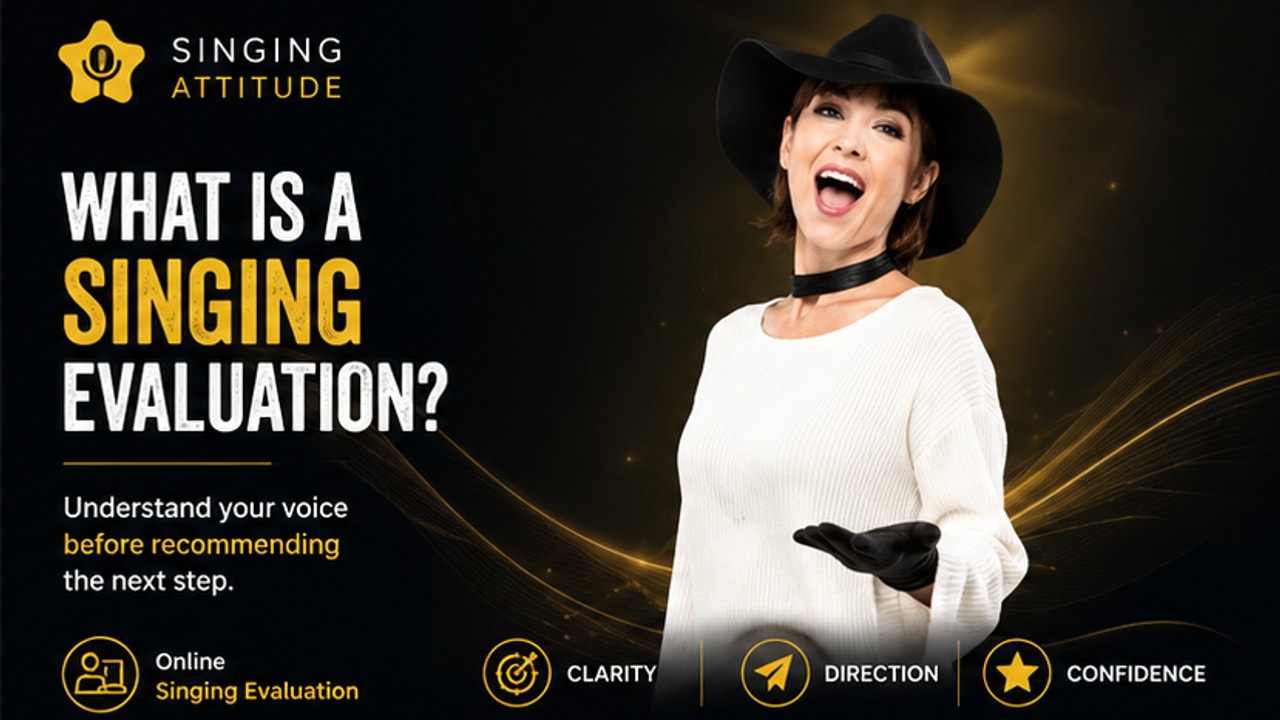 1 minuteWhat Is a Singing Evaluation?Liuba explains the purpose of the Online Voice Evaluation and why it starts with understanding your voice before recommending the next step.
 1 minute 7 secondsWhy Start With Evaluation?Liuba explains why the Evaluation protects your next investment by clarifying what your voice needs before ongoing lessons.
 22 secondsMeet Liuba: Course IntroductionThis short introduction gives context for the Singing Attitude course pathway and the care behind the upcoming online course library.
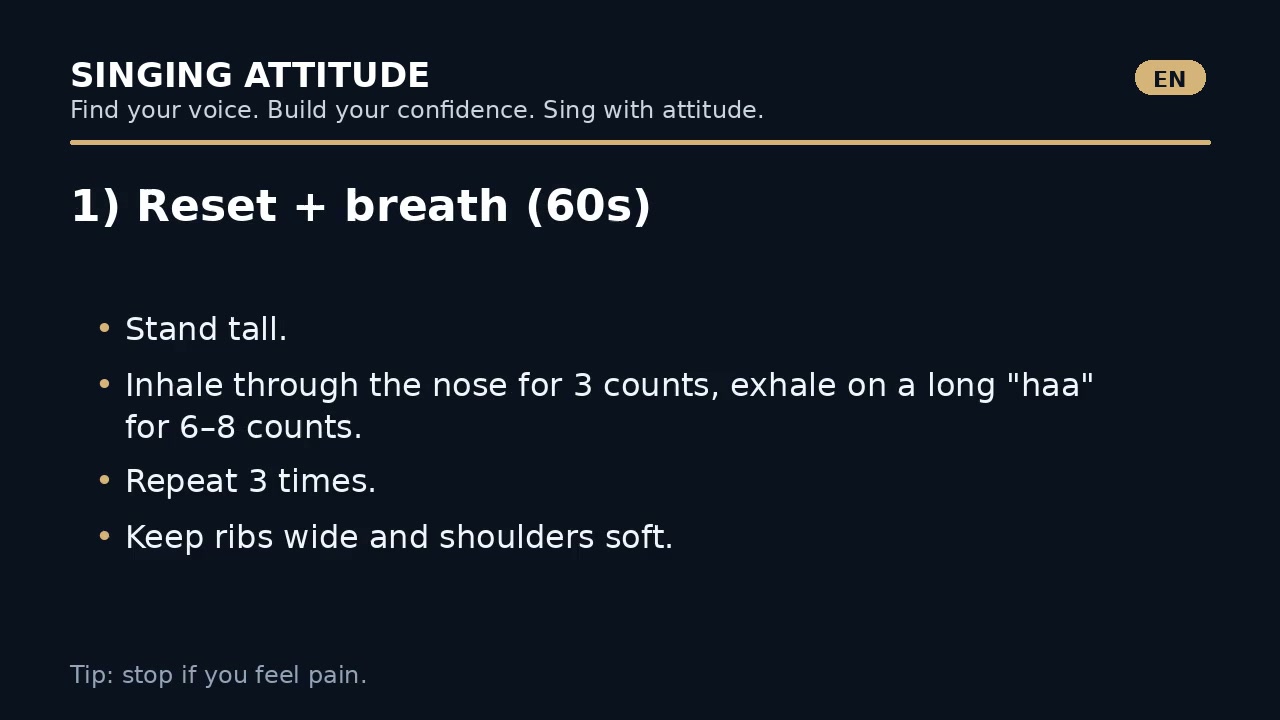 2 minutes 1 second5-Minute Warmup RitualThis short ritual helps you prepare the voice with ease, consistency, and attention rather than pressure.


After watching
The video gives you the principle. The next useful step is getting the real pattern in your own voice identified calmly and clearly.
Use the Evaluation when the blocker is still unclear.
Use feedback when a short clip already shows what needs correction.
Still choosing?
Use the quiz if you recognise the problem but still cannot tell whether Evaluation, feedback, coaching, or Lab is the right next step.


 1K+
1K+